

Wallonia's first plant recycling center gives a second life to cemetery chrysanthemums
Published on 17 June 2025
Publication
Established in Chimay in 2022, ECOCIM has created the first plant recycling center in Wallonia. This innovative initiative aims to prolong the life of chrysanthemums left in cemeteries at All Saints' Day. This project is fully in line with the circular economy approach, offering an ecological and sustainable alternative to the traditional floral waste management cycle.
This article is part of a series dedicated to exploring the journeys of the winners of the second edition of Go Circular. In this series, we highlight the inspiring initiatives of these awardees. Ecocim is part of the "Starter" category and is developing a circular approach focused on reuse.
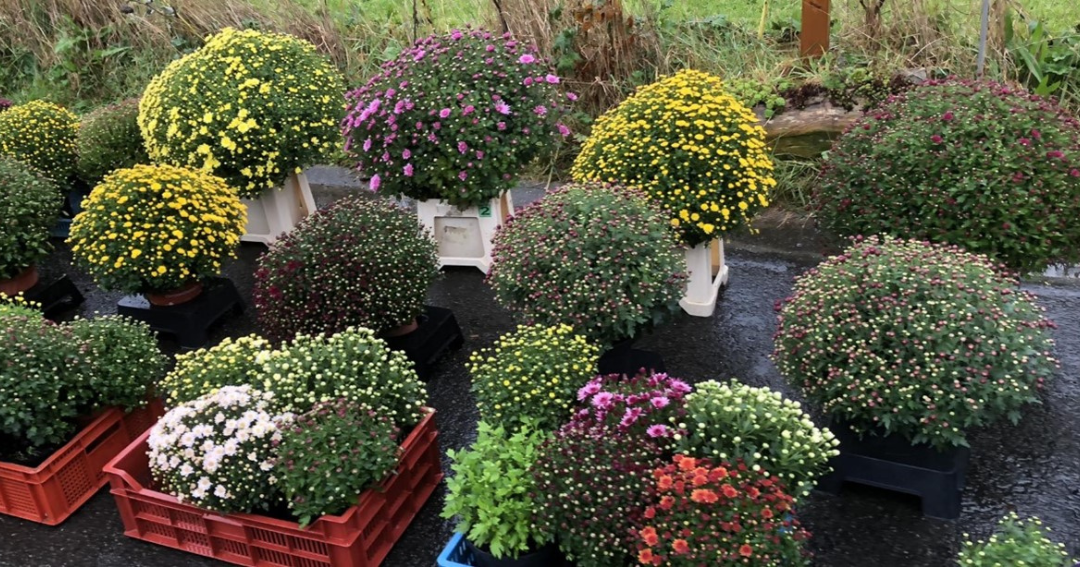
Every year, around All Saints’ Day, cemeteries fill with chrysanthemums, a plant traditionally used to honor the deceased. Unfortunately, once wilted, these plants are usually discarded along with their pots and then incinerated. This process not only has a significant environmental impact but also represents a considerable financial burden for municipalities. Yet, chrysanthemums are perennial plants that can be replanted and bloom again.
Ecocim’s business model is based on the collection, sorting, preparation for reuse, and repurposing of chrysanthemums and their pots. By reinventing the life cycle of chrysanthemums, the company integrates environmentally friendly practices into the horticultural sector.
The process implemented by ECOCIM is simple but effective. It begins with the collection of chrysanthemums and their pots in specially installed sorting containers in cemeteries. Once collected, the plants are sorted: those that cannot be reused are composted, while the others are repotted in good-condition containers and placed in winter storage. After winter, the replanted chrysanthemums receive horticultural care before being sold through short supply chains, mainly at local markets and through partnerships with schools and municipalities.
But ECOCIM doesn’t stop at giving chrysanthemums a second life! The project’s overall approach is resource-efficient: the company uses unheated greenhouses to limit energy consumption, collects rainwater for irrigation, and composts pruning waste. Finally, the chrysanthemums are sold without unnecessary packaging, in reused pots, thus reducing their ecological footprint.
Beyond the environmental benefits, ECOCIM’s project also generates positive social impacts in Wallonia: it is developed in partnership with local authorities and also dedicates time to public awareness through the installation of informational signs in cemeteries. In parallel, ECOCIM trains young people in sustainable horticultural practices, contributing to education and the relocalization of horticultural production in Belgium. Ultimately, this initiative stimulates local job creation, strengthening the regional economy.
In 2023, ECOCIM collected 147 tons of waste—equivalent to 70,000 chrysanthemums—from 66 cemeteries with the participation of 10 municipalities. Thanks to the Go Circular project call, the company plans to acquire additional space for chrysanthemum storage and expand its activities.
Moreover, the company aims to create synergies with sheltered workshops, social enterprises, and schools to replicate this model in other regions, with the goal of implementing this practice in over 200 cemeteries!